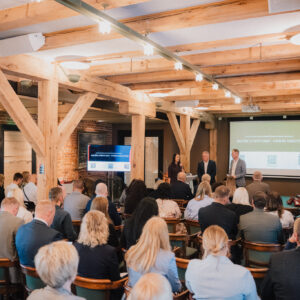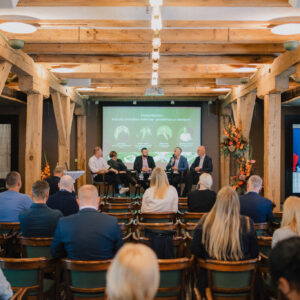
18-19 September The International Waste Management Conference “Less Waste – More Future” took place in Liepaja, Latvia, on 18-19-19 September. The 17th edition of the event brought together more than 140 participants – heads of Latvian ministries and municipal authorities, waste managers, representatives of industry associations and experts from different countries. Discussions focused on the implementation of the circular economy, awareness-raising among the population and the application of innovation in waste management.
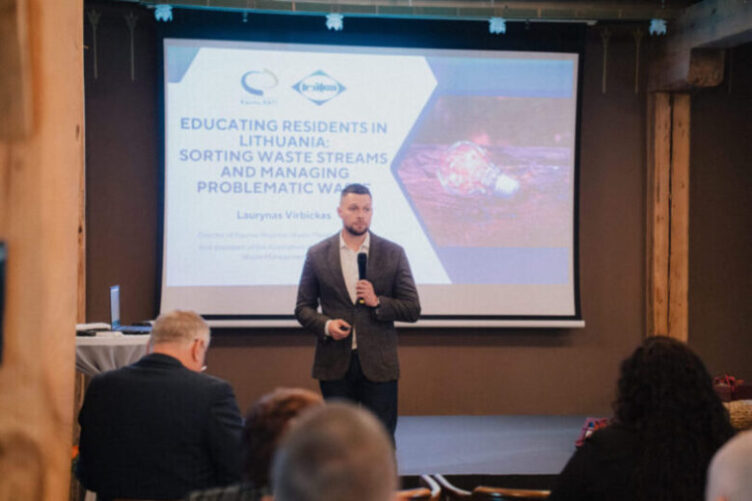
Lithuania was represented at the conference by Laurynas Virbickas, Vice President of the Lithuanian Association of Regional Waste Management Centres and Director of Kaunas RWMC. He presented Lithuania’s experience in the field of environmental education, stressing that public education is a shared commitment – from national authorities and municipalities to importers of producers and regional waste management centres. In his presentation, he presented good practices and initiatives in environmental education in Lithuania and discussed the challenges related to the management of problematic waste in Lithuania, such as tyres, electronics and hazardous waste.
Summing up the presentation, Laurynas Virbickas stressed that real changes in the behaviour of the population are only possible when education, infrastructure and regulation work together. He argued that strengthening joint coordination between institutions, the development of integrated platforms, the responsibility of organisations to provide the right information to the public, and the wise investment of EU funds in targeted measures and target groups will be of particular importance when looking at further improvements in education and waste management.
The conference also focused on the development of the deposit system, the strengthening of the producer responsibility principle, new European regulations and the future prospects for landfills. The topics discussed showed that both Latvia and Lithuania are facing similar challenges, and that joint discussions and sharing of experiences help to strengthen regional cooperation towards a circular economy. New international contacts were established during the conference, opening up opportunities for further exchanges of experience and joint initiatives.